Curtains are among the most physically demanding textiles in a home: they are exposed to ultraviolet light for extended periods, subjected to temperature cycling near glass surfaces in winter, and handled repeatedly at the leading edge where fabrics show wear first. These conditions behave differently across natural fibre types, and understanding them helps explain why certain fabrics are well-suited to curtain use while others, despite being marketed for it, perform poorly over time.
Wool Curtain Fabrics: Weight Categories and Properties
Wool is among the most technically capable natural fibres for curtain use. Its natural elasticity allows it to hang well without sagging over time, and it accepts dyes with good depth and fastness. More practically, wool's inherent flame-resistance — it chars rather than melts or sustains flame without an external source — means it meets many interior safety standards without chemical treatment. In contract environments (hotels, residential buildings in certain EU fire classifications), untreated wool often qualifies where synthetic alternatives require chemical flame-retardant application.
Curtain-weight wool fabrics are typically classified by their grams per linear metre (GLM) or GSM:
- Lightweight (up to 200 GSM) — semi-translucent when backlit, suitable for layering with a voile or using in south-facing rooms where full light blocking is not required.
- Medium-weight (200–350 GSM) — the most common range for residential wool curtains. Provides significant light reduction without requiring an additional lining to hang well.
- Heavyweight (350 GSM and above) — used where acoustic dampening is a consideration in addition to light and thermal control. Common in Scandinavian and northern European interiors with older single-glazed window systems.
Wool curtains require careful positioning relative to radiators. Sustained heat from beneath can over-dry the fibres, causing brittleness at the bottom hem over several heating seasons. A gap of at least 15 cm between a radiator top and the lower edge of a curtain is a reasonable precaution in Polish apartment configurations where radiators sit below window sills.
Linen Curtains: Light Diffusion and UV Resistance
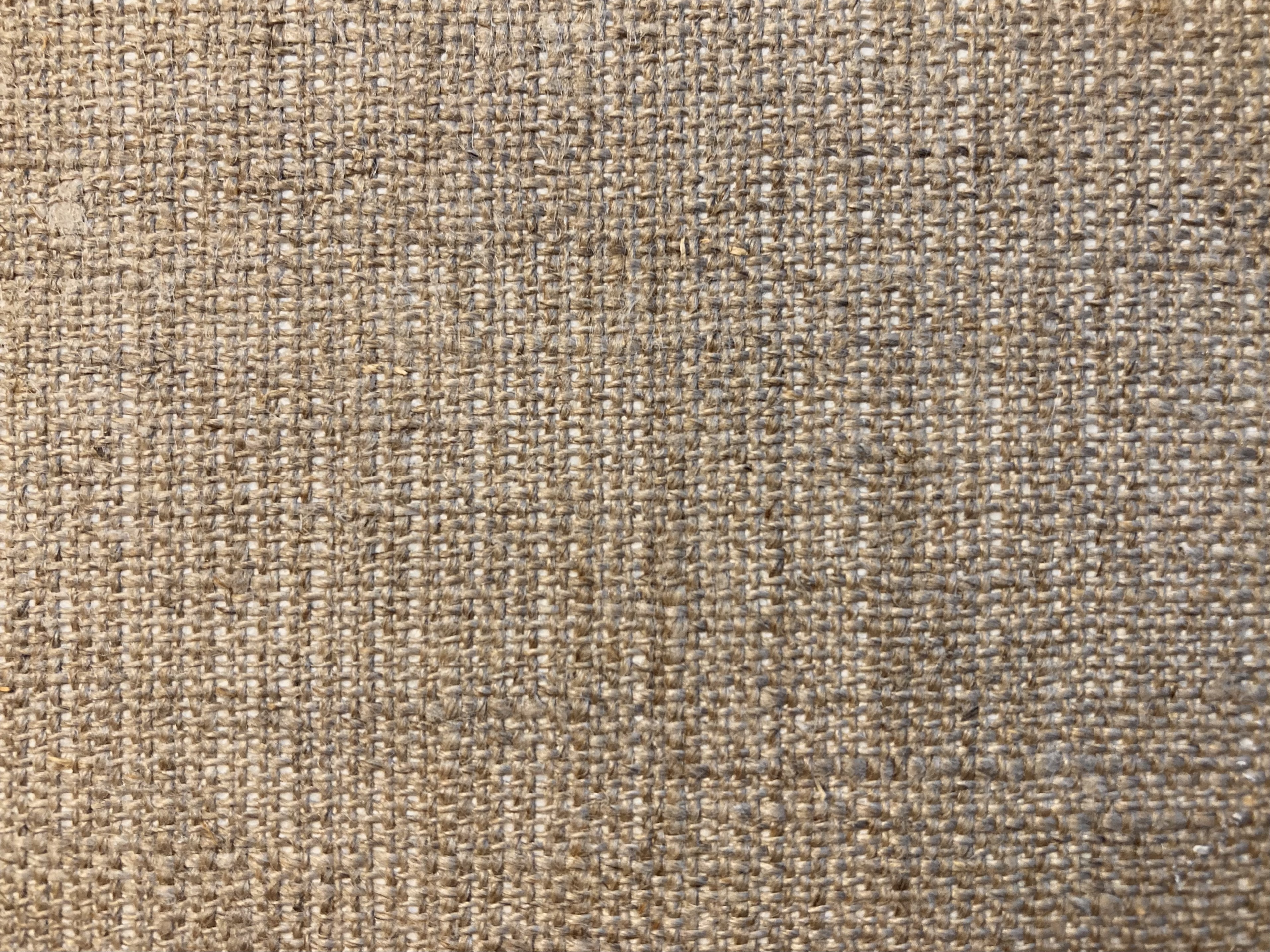
Linen's most distinctive characteristic as a curtain fabric is how it handles light. A medium-weight linen panel (around 160–200 GSM) transmits light in a diffused, warm-toned way rather than blocking it — this property makes linen more commonly used as a voile replacement or a sole layer in rooms where soft daylight is preferred over complete privacy. Unlined linen curtains in east or west-facing rooms create a characteristic golden quality to morning or evening light.
Linen's relative UV resistance is worth noting. The cellulose fibre in linen is somewhat more resistant to UV degradation than cotton, though both will eventually weaken at the fold lines where light concentration is highest. Choosing curtains with a generous heading (the gathered or pleated portion at the top) allows the hanging position to be shifted periodically, distributing UV exposure across the full panel height rather than concentrating it at the fold of the pleat.
Unlined linen can develop a permanent drape form after the first few months of hanging. This is a characteristic of the fibre relaxing under gravity, not a defect. Once established, the drape typically remains stable. Washing and re-hanging may reset this process; most linen curtains intended for domestic use are washed annually, at which point re-hanging straight while slightly damp helps re-establish the fall before the next season.
Cotton Curtain Fabrics: Versatility and Limitations
Cotton is the most widely used natural curtain fabric by volume, primarily because it accepts printing and weaving at lower cost than wool or linen. Cotton canvas, cotton duck, and cotton velvet each appear in curtain applications with different results.
Cotton canvas (typically 300–400 GSM) hangs with structure but can stiffen in the upper zone near the heading tape over time as the fibres near window-level experience repeated moisture cycling from condensation. Cotton velvet — woven with a dense, soft pile — provides excellent light and sound absorption but requires careful vacuuming rather than full washing to maintain the pile direction and prevent permanent crushing.
Cotton's principal limitation in curtain use is UV degradation: untreated cotton fibres break down faster than linen or wool at the same UV exposure level. South-facing windows in Poland, which receive direct sun for extended periods in summer, will show thread weakening at fold lines in cotton curtains within three to five years of continuous hanging without rotation or protection from UV filtering glazing.
Lining: Thermal and Acoustic Function
Lining substantially changes the performance profile of any curtain fabric regardless of fibre type. Standard cotton sateen lining adds body to lightweight fabrics, improves drape, and protects the face fabric from UV by intercepting light before it reaches the decorative layer. It adds limited thermal benefit on its own.
Interlined curtains — with a layer of bump (a thick, loosely-woven cotton interlining) between face fabric and lining — provide meaningful insulation at windows. UK research on pre-1980s uninsulated housing found that heavy interlined curtains reduced heat loss through single-glazed windows by up to 30% compared to uncurtained glass. In Polish apartment blocks with double glazing, the proportional benefit is smaller but still measurable in rooms where windows face prevailing winter wind directions.
Blackout lining eliminates light transmission but is typically a coated synthetic material rather than a natural fibre. It can be used as a separate, detachable layer behind natural-fibre curtains so that the primary curtain can be washed independently — a practical arrangement that preserves the appearance of natural fabric while gaining the light-blocking function when needed (e.g., in a bedroom used for daytime sleep).
Heading Styles and How They Affect Fabric Quantity
The heading — the top treatment that creates the gather or pleat — determines how much fabric a curtain requires relative to the window width. Eyelet headings (with metal rings) typically require 1.5–2× the window width in fabric. Pencil pleat headings gather to approximately 2.5× width. Pinch pleat (including French pleat) uses 2–2.5× width but distributes weight differently through the fold, which affects how a heavy wool or interlined curtain hangs over time.
For heavy natural fabrics — wool above 300 GSM or interlined linen — hand-sewn pleats rather than tape-and-hook systems distribute stress more evenly at the heading, reducing the risk of the tape tearing away from the face fabric over years of drawing. This is a consideration relevant to quality full-length curtains in a primary living room where curtains are drawn daily.
Further Reading
Standards for curtain fabric fire performance in residential buildings in Poland follow EU Regulation No 305/2011 (Construction Products Regulation). The Woolmark Company publishes technical specifications for wool fabric classifications relevant to interior textiles, including fire performance benchmarks. The Textile Institute maintains reference definitions for weave structure and fabric construction terminology cited throughout this article.