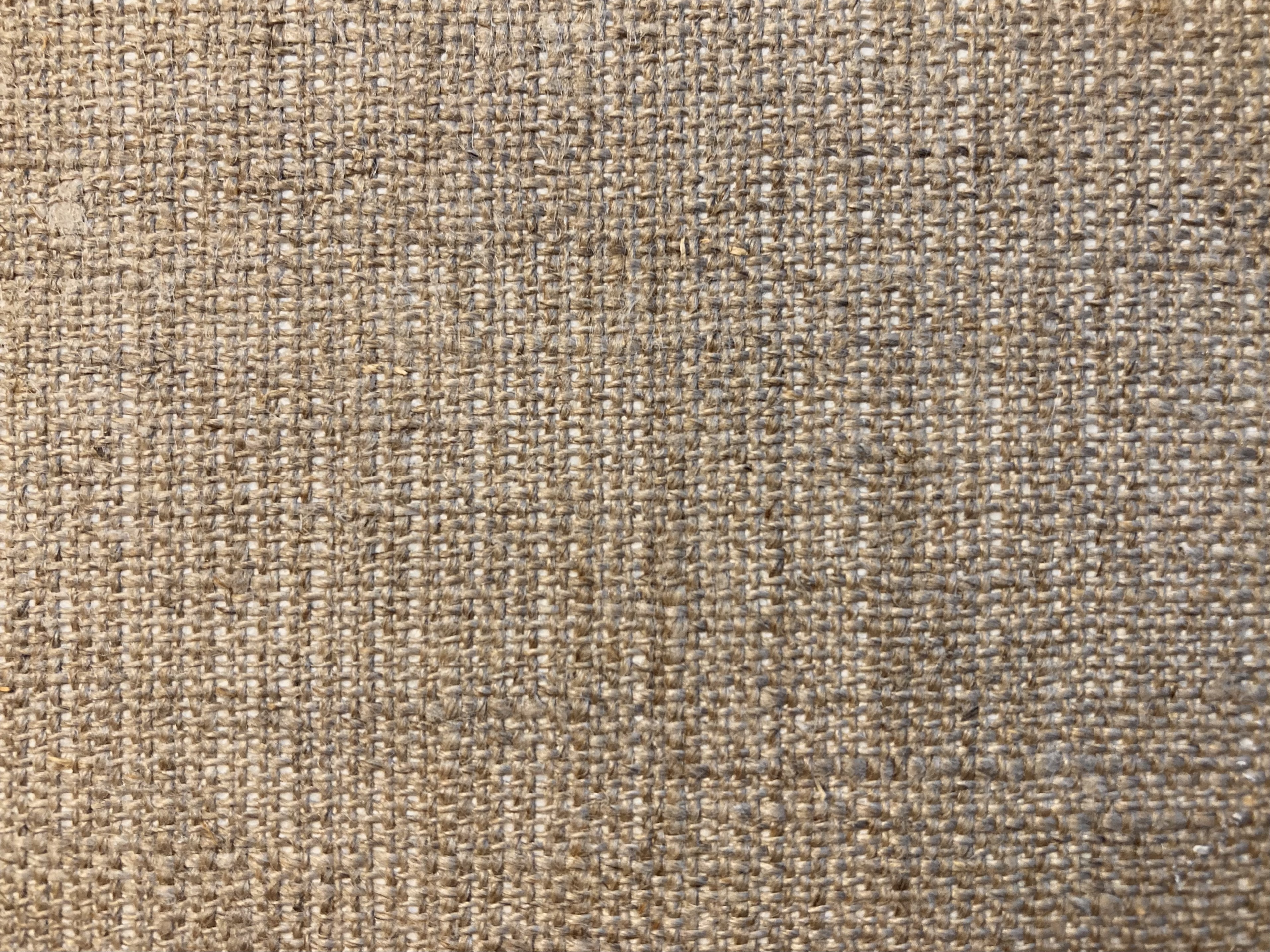
The distinction between hand-knotted, hand-tufted, and flat-woven (kilim-style) rugs is fundamental to understanding what you are buying, yet these terms appear inconsistently in retail descriptions. Each technique produces a different structure, a different level of reversibility, and a different durability profile under foot traffic.
Flat-Woven Rugs: Kilim and Related Techniques
Flat-weave rugs — kilims, dhurries, and Scandinavian rya variants among them — are constructed without any pile. Coloured weft threads are woven through the warp to create the pattern, and the resulting fabric is the same weight throughout with no backing material required. The finished piece is reversible; pattern appears on both faces, often as a mirror image.
Flat-weave construction produces a thinner, lighter rug that lies close to the floor. This makes it well-suited to high-traffic areas because there is no pile to compress or trap dirt at depth. Cleaning is straightforward — the flat surface can be beaten, vacuumed from both sides, and hand-washed relatively easily. The trade-off is underfoot softness: flat-weave rugs provide little cushioning and typically require an underlay pad on hard floors.
Kilim-style rugs from Central Asian, Anatolian, and Caucasian traditions often incorporate geometric motifs derived from tribal weaving practices. The motifs carry documented symbolic meanings within specific regional traditions, though commercial production frequently reproduces these patterns outside their original context. The Metropolitan Museum of Art maintains a documented collection of Anatolian flatweaves that provides useful reference for pattern origin research.
Hand-Knotted Rugs: Structure and Knot Count
Hand-knotted rugs are constructed by tying individual wool (or silk, or cotton) knots around pairs of warp threads across the full width of the loom, then cutting each knot to a set pile height. A single square decimetre of a fine Persian-style rug may contain 400 or more individual knots; coarser tribal rugs may have 50–80 knots per square decimetre. Both are legitimately hand-knotted.
Knot density affects pattern resolution: higher knot counts allow finer curvilinear designs. Durability, however, is also determined by wool quality. A coarser, lower-density rug woven from long-staple mountain wool can outlast a finer-knotted piece made with short-staple wool, because the fibre itself resists abrasion better.
The knot type — Persian (Senneh) versus Turkish (Ghiordes) — affects pile symmetry and influences how designs appear from different angles, though it does not independently determine quality. Both knot types appear in long-lasting rugs across multiple traditions.
Hand-Tufted Rugs: A Different Category
Hand-tufted rugs are made by pushing wool loops through a backing fabric using a handheld tufting gun, then shearing the loops to create pile. A secondary backing — usually latex or cotton — is applied to hold the tufts in place. The process is faster than hand-knotting and produces a softer initial handle, but the latex backing degrades over time, typically within 10–20 years. Dried latex can crack, crumble, and shed dust that accumulates beneath the rug.
Hand-tufted rugs are not reversible and cannot be repaired by re-knotting individual areas of damage. They are nevertheless a practical option where budget and intended lifespan are matched to those characteristics — they are not inferior products, simply a different product category that is sometimes mislabelled as equivalent to hand-knotted construction.
Natural Fibres in Rug Construction
Wool is the predominant fibre in quality handwoven rugs for good reason. Its natural lanolin content provides inherent stain resistance, it recovers from compression over time (unlike most synthetic fibres), and it accepts natural and synthetic dyes reliably. Wool rugs in regular domestic use can remain structurally sound for 50–100 years if maintained.
Cotton is used for warp foundations in many pile rugs because it is dimensionally stable and holds tension well. It also appears as the primary fibre in dhurries (Indian flat-woven rugs), where its smooth handle and ability to hold bright colours make it suitable for decorative use in lower-traffic rooms.
Jute and sisal are plant-fibre alternatives that appear in contemporary natural-decor contexts. They are significantly less durable than wool under heavy foot traffic, and highly susceptible to moisture damage — a point relevant in Polish apartments where condensation can occur on cold floors near exterior walls in winter. Jute and sisal are better suited to low-traffic areas where aesthetic rather than functional durability is the primary consideration.
Polish and Regional Weaving Traditions
Poland has its own documented handweaving tradition, particularly in the Podhale highland region where kilimy zakopiańskie (Zakopane-style kilims) are woven with geometric patterns in natural undyed wool. The Tatra Museum in Zakopane maintains a collection of historic examples. Contemporary weavers in the Łódź region, historically a centre of textile manufacturing, have preserved handloom techniques as part of a broader craft revival.
Handwoven cotton rugs from Bolimów and other traditional craft centres offer a different aesthetic — looser weave, lighter weight, suited to summer interiors or use as decorative wall pieces. These are distinct in construction and purpose from the heavier wool kilims.
Practical Notes on Placement and Maintenance
Flat-weave rugs on hard floors require a non-slip underlay to prevent movement. Rubber-backed underlays can transfer colour to some flooring materials over time; a woven cotton underlay between the rug and a rubber pad avoids this. Hand-knotted rugs on bare floors benefit from rotation every one to two years to distribute wear from foot traffic patterns.
For cleaning, dry soil should be removed before any moisture treatment — vacuuming both sides of a flat-weave rug, and vacuuming pile rugs with the grain of the pile rather than against it. Professional cleaning every three to five years is standard practice for valuable hand-knotted rugs; the process involves controlled moisture application and careful drying that is difficult to replicate at home without risking foundation shrinkage.